Image credit: Cai Jia Zeng(蔡家增)
After adopting artificial intelligence (AI) models, local hospitals can now predict, up to three years in advance, the risk that patients with type 2 diabetes will develop moderate to advanced chronic kidney disease. This breakthrough technology enables early identification of high-risk individuals, allowing for more proactive preventive care.
This tool, called HealthVector Diabetes (HVD), is a “clinical decision support” system that uses “digital twin” AI technology to provide risk scores directly within electronic medical records. Since its official rollout in August last year at the Diabetes & Metabolism Centre (DMC) under the Singapore General Hospital (SGH), as well as Eunos Polyclinic (SingHealth), it has already classified risk for more than 12,000 patients.
The “digital twin” model acts like a virtual replica of a patient in a computer. It allows doctors to “fast-forward” and visualise how a patient’s condition may deteriorate, helping them choose the best prevention and treatment strategies.
Traditionally, in diabetes care, doctors often only initiate kidney-protective treatments after clear signs of kidney damage, such as protein in the urine, appear. By then, interventions may already be delayed.
Health AI Must Follow the “Human-in-the-loop” Principle
However, AI tools are still just tools. While they can process data quickly and provide risk scores, these serve only as references. Final treatment decisions must always be made by doctors based on clinical experience and the patient’s actual condition, not by relying solely on machines.
Associate Professor Bee Yong Mong, Head of the Department of Endocrinology and Senior Consultant Physician at SGH, emphasised that such medical AI must adhere to the “Human-in-the-loop” principle rather than replace doctors. This means integrating human intervention and professional judgment into AI or automated processes to enhance accuracy, safety, and ethical oversight.
In March this year, the Ministry of Health (MOH) and the Health Sciences Authority (HSA) released an updated Artificial Intelligence in Healthcare Guidelines (AIHGle 2.0). The revised guidelines build on the 2021 version to address rapid advances in AI, including generative AI.
Associate Professor Bee noted that the HVD project faced both technical and clinical challenges in its early stages. Technically, it was the first model to run on a new cloud platform, and building a complex system to ensure secure data transmission was a major challenge. Clinically, doctors needed time to adapt and change established workflows.
“At present, we have not informed patients that AI is being used. However, according to the latest guidelines, to respect patients’ right to know, if AI significantly impacts treatment in the future, we will encourage doctors to explain it to patients, including the benefits, risks, and alternatives.”
Clearer Direction for AI Development
The updated guidelines also provide clearer direction for local healthtech companies developing AI tools.
By early next year, private general practitioner (GP) clinics and polyclinics participating in HealthierSG will be able to use an Assisted Chronic Disease Explanation using AI (ACE-AI) tool developed by Synapxe. This tool is designed to identify individuals at high risk of developing diabetes or high cholesterol within the next three years.
The tool predicts risk based on personal health data such as age and medical history. If the risk exceeds 75%, the system will trigger an alert.
Synapxe’s Chief Data Officer, Andy Ta, explained that MOH, HSA, and Synapxe jointly developed the updated guidelines with a simple goal: to create a trustworthy environment for medical innovation while ensuring absolute patient safety.
ACE-AI strictly follows these updated guidelines during development.
The model was trained using more than 3.6 million anonymised real patient records, covering diverse ethnic backgrounds and common chronic conditions such as diabetes, hypertension, and hyperlipidemia.
Before real-world deployment, ACE-AI underwent “dual testing”: validation using historical blind test datasets to ensure diagnostic accuracy, and trials in real clinical environments, with continuous feedback from doctors to refine workflows and minimise patient risk.
“AI is advancing very quickly. Both developers and hospitals need clear rules—not just to ensure clinical safety, but also to build public trust in AI healthcare,” Ta said.
Helping Startups Overcome Barriers
Elson Yong, founder of local healthtech company Carecam, believes the updated guidelines have facilitated collaboration among industry players and public healthcare institutions, helping startups overcome regulatory barriers more easily.
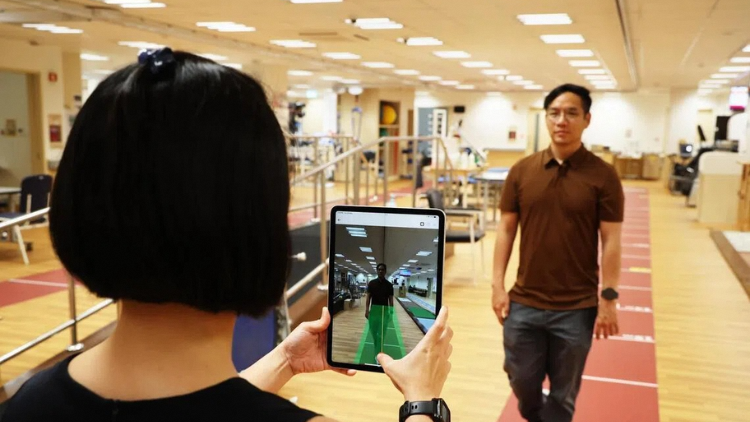
Carecam’s 3D gait analysis project has already completed testing in a regulatory sandbox with Tan Tock Seng Hospital (TTSH) and is now preparing for pilot deployment there.
This 3D intelligent analysis tool can simultaneously generate data on multiple joints, including gait balance comparisons between both legs and detailed assessments of the hip, knee, and ankle joints.
Yong said, “The updated guidelines serve as a roadmap for local health AI innovation. For startups like us, clarity of rules, transparency, and strong accountability mechanisms are crucial. They give us confidence to push forward and boldly develop and deploy cutting-edge healthcare solutions.”
