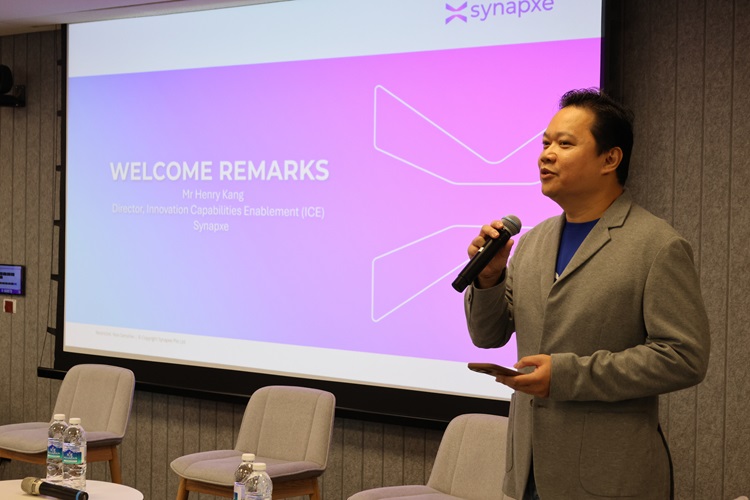
Synapxe held our annual HealthX Tech Retreat in April this year, an exclusive event for senior healthcare leaders to experience and discuss the latest trends in HealthTech Innovation.
What really goes on at the Tech Retreat? Here’s a sneak peek!
Diving into this year’s theme: “Proven Impact: Future Practice”
This year’s retreat, themed “Proven Impact: Future Practice”, was led by Synapxe’s Innovation Capabilities Enablement (ICE) team as part of a broader effort to foster collaboration between healthcare and technology leaders. Discussions focused on reimagining and shaping Singapore’s public HealthTech sector to better support healthcare professionals and the public.
The retreat also allowed healthcare leaders and technology providers to engage directly. These tech leaders shared examples of how their technologies have been implemented in other markets and provided insights into how health systems globally are adopting and integrating HealthTech solutions. The lively exchanges addressed practical considerations, including regulatory requirements, implementation frameworks, and operational integration.
Global lessons, applied locally
Attendees examined HealthTech success stories from around the world, but the goal was not just to highlight which technologies worked elsewhere – they explored what made these solutions successful, the challenges faced during implementation, and what would be needed to adapt similar innovations for Singapore’s healthcare system.
A central question emerged: how can healthcare systems identify innovations that are promising, practical, and deliver real results locally?
Panel discussions featured healthcare leaders and technology providers sharing real-life experiences implementing and scaling solutions across healthcare systems.
The first panel, “From Overseas Technology Solutions to Local Context: Scaling HealthTech Across Borders,” explored why many proven global health technologies struggle to scale successfully in new markets.
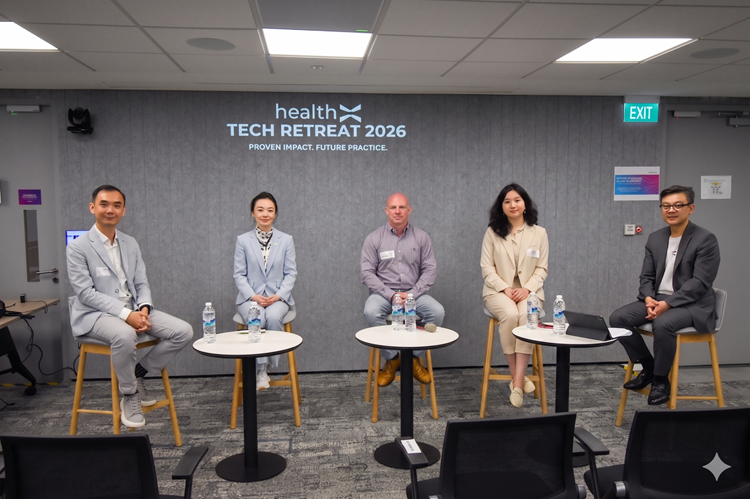
Photo enhanced by AI
Moderated by Synapxe’s Director of Legal, Gary Low, the discussion brought together diverse perspectives from Alibaba DAMO Academy, NTT DATA, SenseCare, and Siemens Healthineers.
Panellists emphasised that healthcare systems are shaped by local factors, regulations, governance, clinical workflows, and cultural expectations. Solutions that work in one country cannot be transplanted directly into another without thoughtful adaptation.
Trust was another key theme. For new technologies to gain acceptance, they must not only demonstrate technical capability but also earn the trust of healthcare professionals and patients by meeting local requirements and fitting into established practices. Building strong local partnerships is essential to ensure that innovations are tailored to the unique needs of each community.
Ultimately, the panel highlighted that scaling HealthTech in new markets is not just a technical issue. Success depends as much on empathy, collaboration, and trust as on having the right infrastructure and regulatory compliance.
Reimagining tomorrow’s public healthcare sector
Preparing for the Future of HealthTech
The second panel shifted focus to the future, exploring what it will take for Singapore to be ready for the next generation of HealthTech.
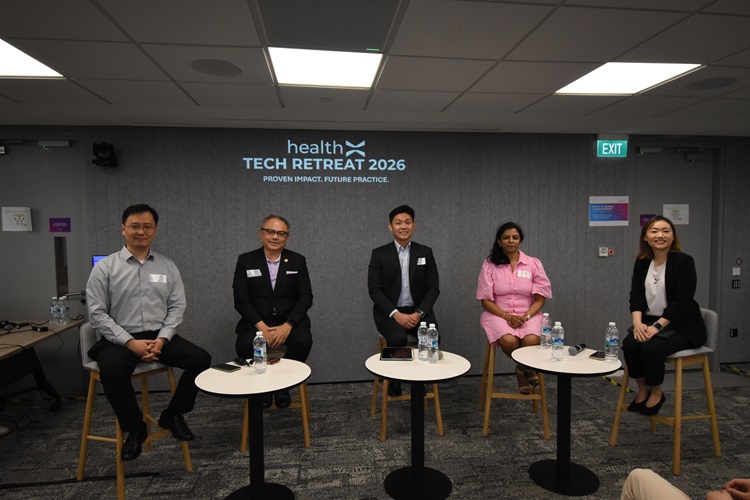
Moderated by Synapxe’s Director, Data Analytics & Ai-Services Planning (DNA), Christine Ang, the second panel invited leaders from Amazon Web Services, Fourier Rehab, Huawei, and Tencent Cloud to the stage.
Panellists discussed how healthcare is moving away from reacting to illness and toward more proactive, preventive, and personalised care. In Singapore, this shift is especially important as more people require ongoing management of chronic conditions and care in community settings.
AI will be central to this transformation, with its applications growing quickly, from helping doctors diagnose conditions to enabling patients to explain their symptoms more clearly. At the same time, emerging technologies like rehabilitation robots are already making a real difference by easing the workload of healthcare staff.
However, technology by itself isn’t enough to change healthcare. Even with these innovations, most care is still delivered in hospitals, while more patients need ongoing support in the community. Achieving this shift will require rethinking how care is organised and delivered.
To build trust and encourage adoption, panellists stressed the need for user-friendly technology that is easy to set up and forgiving of mistakes. Simple design features like bigger text, fewer steps, and support for caregivers can make the difference between a solution being widely used or ignored. Panellists also noted that as technology evolves, the skills and roles of the healthcare workforce must evolve as well.
From Innovation to Impact in Singapore
The tech retreat wrapped up with HealthTech Connect, a showcase where nine partners demonstrated solutions to real-world challenges. This session connected panel ideas directly to practical applications, helping participants see how to insights into action.
More importantly, the session embodied the retreat’s broader goal: creating opportunities for leaders and innovators to share ideas, challenge assumptions, and shape the future of healthcare together.
These conversations are timely as Singapore builds a stronger digital health ecosystem and earns trust in new technologies by strengthening cybersecurity and data protection.
Ultimately, success is measured not by what technology can do, but by the real benefits HealthTech brings to patients, providers, and Singapore’s healthcare system.
